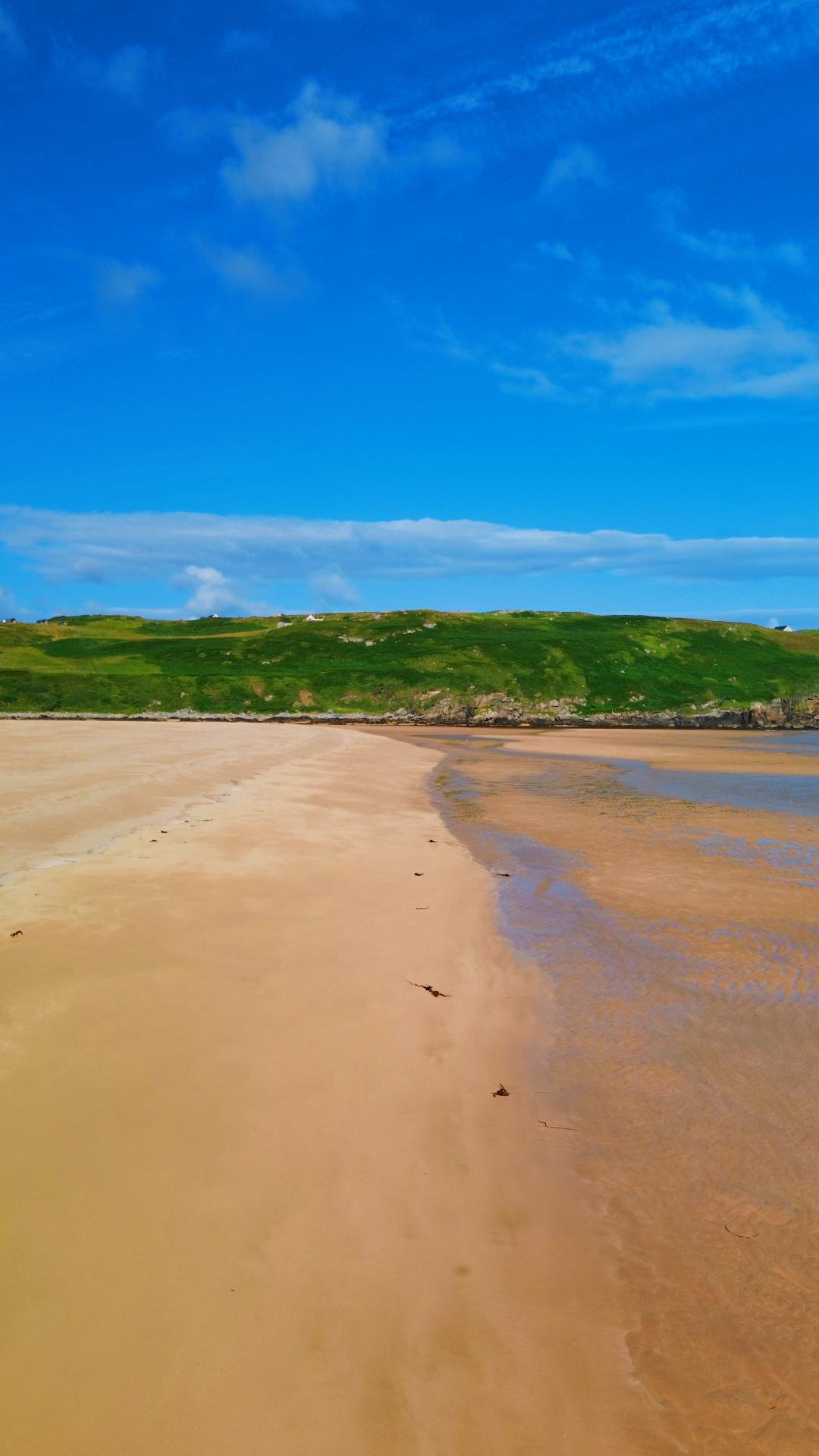
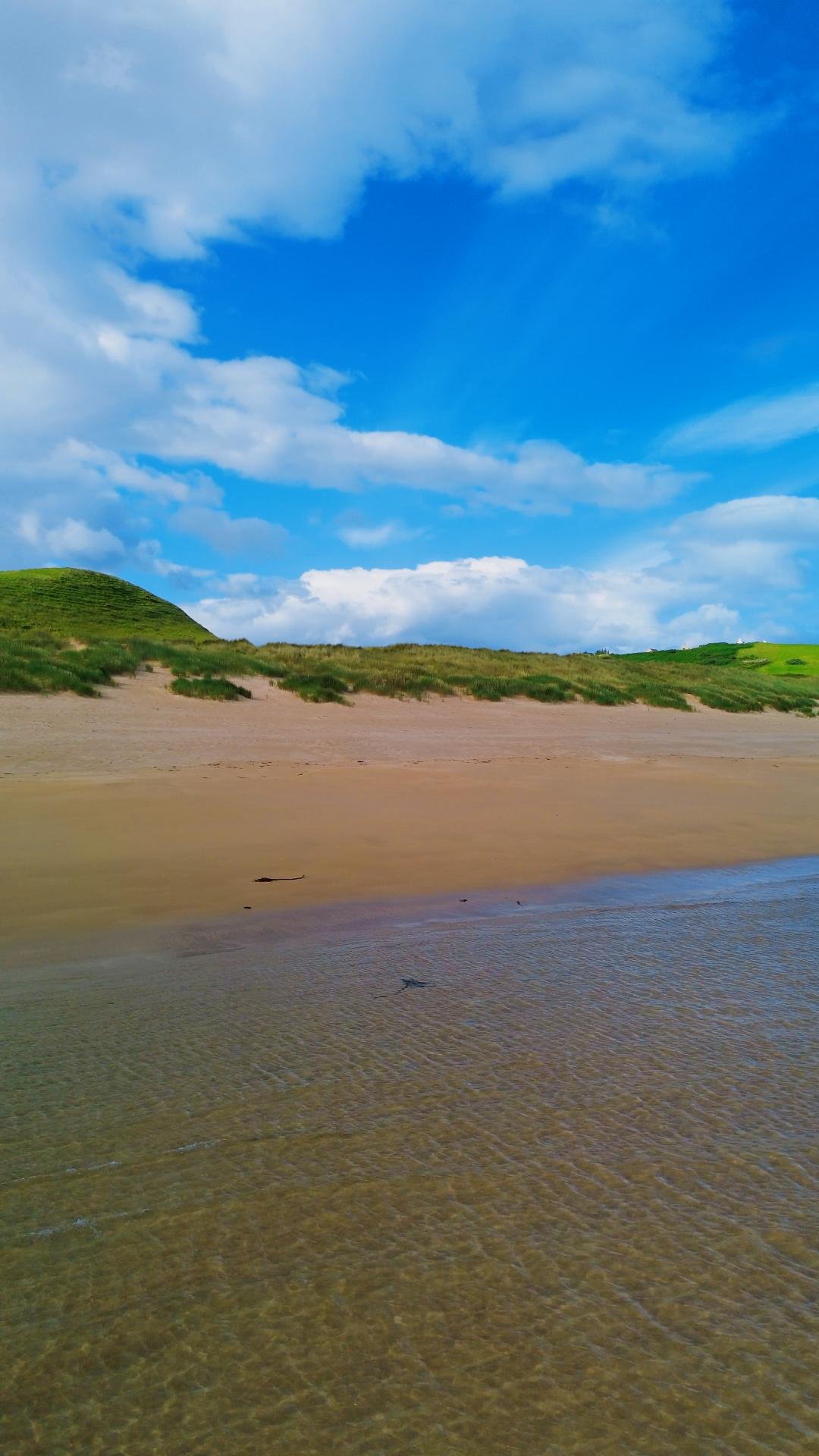
Strathy Beach is a wild sandy bay on the north coast of Sutherland, opening directly onto the North Atlantic.
The beach is backed by rolling dunes and enclosed by rugged coastal scenery, with cliffs, rock stacks and sea caves around the bay.
At the western side, the River Strathy reaches the sea, adding another distinctive feature to this remote Highland shoreline.
Strathy Bay is valued for more than its scenery. The coastal fringe forms part of a Site of Special Scientific Interest,
reflecting the importance of its dune and coastal habitats. The bay is also known for birdlife and marine wildlife,
while its exposed Atlantic setting makes it a recognised surfing location.
The eastern side of the bay is especially dramatic, with cliffs, caves and isolated rock formations shaped by the sea.
Conditions can change quickly on this open coast, and some rocky areas or caves may become unsafe as the tide rises.
A dedicated parking area is reached from the A836 via Strathy East, past the cemetery. Local visitor information confirms a parking area with an information cabin and toilet facilities. Parking arrangements can change, so check current signs when you arrive.
About 5 minutes
Allow about 5 minutes each way from the parking area to the beach. The route crosses grass-covered dunes on an informal path and descends toward the sand; surfaces can be uneven, sandy or slippery in wet weather.
⭐⭐☆☆☆Moderate
Moderate. The walk is short, but the dune path is uneven and the descent to the beach can be steep in places. Wind, wet ground and loose sand can make access harder.
Yes, with care
Families can enjoy the beach, but young children should be closely supervised around the sea, river mouth, rocks and caves. The dune path is not a smooth accessible route and is unsuitable for most pushchairs or wheelchairs. Toilets are available by the parking area.
• The River Strathy reaches the North Atlantic at the western side of the beach.
• Strathy Bay is framed by Strathy Point to the west and cliffs, stacks and sea caves to the east.
• The coastal fringe around Strathy Bay is designated as a Site of Special Scientific Interest.
• The exposed bay is known locally as a surfing spot and for bird and marine life.
Check tide and weather conditions before exploring rocks or caves. The North Atlantic can be rough and the sea deepens quickly. Keep off fragile dune areas where possible, do not drive onto the dunes, and use suitable footwear for the uneven descent.

 Parking
 Walk distance
 Difficulty
 Family-friendly

 Fun Facts
 Notes